
Before You Fund a Software Modernization Program, Get an Objective Baseline


Before You Fund a Software Modernization Program, Get an Objective Baseline
Key takeaways
- “The system is old” is not enough information to make a modernization decision. Leaders need to understand which parts of the system are creating cost, delivery risk, and constraints on future change.
- A modernization program should begin with evidence about the system’s structure and condition, not a preferred solution such as a rewrite, cloud migration, or platform replacement.
- An objective baseline gives technology, finance, and business leaders a shared fact base for deciding what to improve, replace, retire, or leave alone.
- The goal is not to create another inventory or architecture diagram. It is to make a better decision before committing significant budget, time, and organizational attention.
Most organizations do not wake up one morning and decide, in the abstract, that they should modernize a software system. Something usually forces the question.
A major customer asks for capabilities the current product cannot deliver easily. A cloud migration is underway. A critical developer or contractor is leaving. A security or compliance requirement exposes an old technology stack. An acquisition creates a question about which systems can be integrated, retained, or retired. Or the business has simply reached the point where every meaningful change takes longer and costs more than anyone thinks it should.
The organization now has a decision to make. Should it modernize the system, replace it, rewrite it, move it to the cloud, keep investing in it as-is, or begin retiring it altogether?
The trouble is that companies often make that decision with very little evidence about the actual condition of the software. They may know the application is old. They may know the team is frustrated. They may have an architecture diagram, a list of technologies, a backlog of defects, and a rough estimate of maintenance spending. All of that is useful context. None of it necessarily tells them what needs to change, what can safely be left alone, or whether the proposed investment will solve the problem they are trying to solve. That is why a modernization program needs an objective baseline before it needs a roadmap.
“Old” is not the same thing as “ready to replace”
Age is often the first reason given for modernization. The system is written in an older language. It was built before the current cloud strategy. The original team has moved on. The architecture does not look like what the organization would build today. Those may all be legitimate concerns. But age alone does not tell you whether a system should be replaced.
Some older systems are stable, well understood, and relatively contained. They may need selective investment, better documentation, or a plan for future skills coverage, but they are not necessarily the source of the organization’s delivery problems. Other systems are newer but already difficult to change because they were built quickly, have accumulated dependencies, or rely on a handful of people who understand how the pieces fit together.
The decision to modernize is not really about whether the technology is old. It is about whether the system is creating a business problem that justifies the cost and disruption of changing it.
If every release is delayed because a small change affects far more of the system than expected, that is a problem. If engineers spend a growing amount of time fixing defects, tracing dependencies, and working around fragile components, that is a problem. If a cloud migration or product launch keeps expanding because the organization cannot tell what will be affected, that is a problem.
These are all different problems and they do not all have the same answer. A system might need targeted refactoring, not replacement. It might need clearer boundaries between components before it can be migrated safely. It might be appropriate to retire one capability and preserve another. It may be worth continued investment if its architectural condition is better than the organization assumed. Without a baseline, those decisions become a mix of opinion, urgency, and whoever tells the most compelling story in the room.
The decision to modernize is not really about whether the technology is old. It is about whether the system is creating a business problem that justifies the cost and disruption of changing it.
Modernization is not a strategy by itself
“Modernize the legacy system” sounds like a strategy. Usually, it is a direction in search of one.
Modernization can mean many things: moving an application to the cloud, rewriting code, replacing a commercial platform, breaking apart a monolith, updating a user interface, separating data, changing vendors, or simply reducing the amount of risk in the parts of the system that are hardest to maintain. These are not interchangeable projects, and they do not produce the same result.
A company can spend millions of dollars moving software to the cloud and still be left with software that is hard to change. It can replace one platform with another and recreate the same integration problem in a new environment. It can break a large application into services without creating real modularity if those services still share data, depend on undocumented behavior, or have to be changed together every time the business needs something new.
The modernization decision has to begin with a more basic question: what is the organization trying to improve? Is the problem delivery speed? Maintenance cost? Security risk? The ability to add new product capabilities? A lack of confidence in a critical application? Dependency on a contractor or vendor? The need to integrate or separate systems after an acquisition?
Once that is clear, the next question is whether the software’s structure is contributing to the problem and, if so, where. What is the work an objective baseline is meant to do? It turns a broad modernization conversation into a specific one: this is the part of the system that is creating the most risk; this is what it is affecting; and this is the type of intervention most likely to improve the situation.
What an objective baseline should tell you
A useful baseline should not be another static inventory of applications and technology. Most organizations already have some version of that. It should help people make a decision.
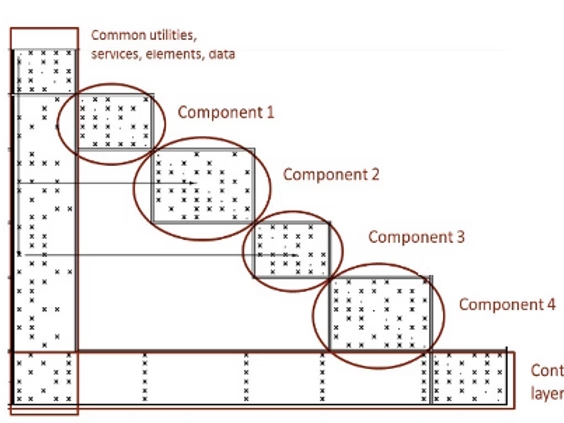
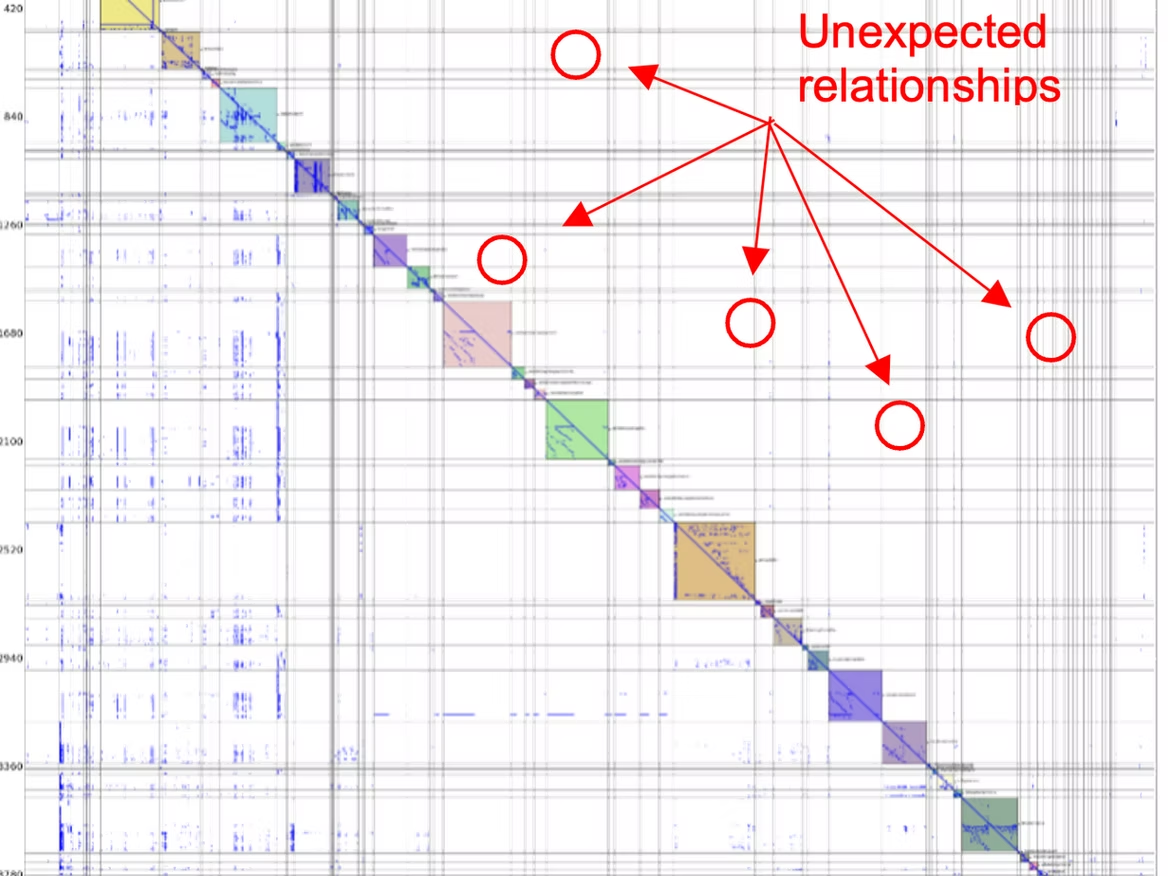
That means understanding how the system is actually connected. Which components are highly dependent on one another? Where are changes likely to propagate? Are there large, tightly connected areas of the codebase that require disproportionate coordination and testing? Which components are broadly shared by other parts of the system? Where has the architecture become difficult to understand because boundaries have eroded over time?
It also means connecting that structural picture to what the business is experiencing. Is the highly connected area also the place where releases slip, defect activity is highest, or maintenance work is consuming the team? Is a proposed cloud migration likely to be more difficult because of dependencies outside the stated scope? Would a targeted refactoring effort make a critical part of the system easier to change, or is the issue primarily that the application is no longer strategically valuable?
This is where an independent assessment becomes useful. Engineering teams have valuable context about the system, but they are also working inside its current constraints every day. Finance sees cost. Product sees delayed delivery. Security sees exposure. A business leader sees a decision that needs to be made. An objective architectural baseline gives those groups a common view of the system rather than forcing them to make a major investment based on incomplete and sometimes conflicting information.
A baseline changes the conversation from “what should we build?” to “what problem are we solving?”
This matters most when the organization has already decided that something needs to happen. Once a modernization initiative has been announced, it is easy for momentum to take over. A preferred technology gets selected. A consulting partner arrives with a proposal. Teams start estimating a replacement program. The original question, which was often “why is this system so hard to work with?” gets replaced by “how quickly can we execute the project?”
That is backwards. The organization should first understand the condition of the system and the consequences of leaving it as it is. It should be able to see which parts are healthy enough to preserve, which parts are creating the most drag, and whether a proposed investment is likely to address the actual problem. Only then can it make a responsible call on scope, cost, timing, and risk. This being said, it does not slow modernization down. Rather, it prevents companies from spending years and significant budget on a program that was poorly defined from the beginning.
The same thinking applies to other major decisions. Before accepting a system from a contractor, acquiring a company with a business-critical platform, migrating an application to the cloud, or scaling AI-assisted development across a codebase, leaders need to know what they are inheriting. They need more than an application inventory and a list of technologies. They need to understand the system’s ability to change.
Good modernization decisions are made before the work begins
The strongest modernization programs do not start with a commitment to rewrite everything. They start with an honest view of the software and the business consequences of its current condition. That view may confirm the need for a significant investment. It may also show that the organization can solve the immediate problem with a much smaller and more targeted effort. Either outcome is valuable. The point is to make the decision with evidence rather than wishful thinking.
Technology leaders are increasingly asked to justify modernization in business terms: What is the risk of doing nothing? What will this change improve? How will we know it worked? What will it cost to continue maintaining the system as it is? What can the business expect after the investment is made? Those are the right questions. They are difficult to answer if no one has established a credible baseline.
Silverthread helps technology leaders make software architecture visible, measurable, and actionable before critical modernization, migration, acquisition, and investment decisions. The result is a clearer view of what the organization owns, what is creating risk, and where change will have the greatest impact. To learn more, connect with us at silverthreadinc.com/contact-us.
Frequently asked questions
What is a software modernization baseline?
A software modernization baseline is an objective assessment of a system’s current condition before major investment decisions are made. It should show how the software is structured, where dependencies and risk are concentrated, and how those conditions relate to delivery, maintenance, cost, and future change.
Why is an application inventory not enough?
An inventory can tell you what applications and technologies you have. It does not necessarily show how changes will propagate through the system, where dependencies are concentrated, or which parts of the software are creating the greatest maintenance and delivery constraint.
Does every older application need to be replaced?
No. Age is one consideration, but it is not the decision by itself. An older system may be stable and manageable, while a newer system may already be difficult to change. The relevant question is whether the system’s current condition is creating business risk, cost, or a constraint on future change.
Does a modernization baseline always lead to a rewrite?
No. In many cases, the best result is targeted modernization: improving a high-risk area, reducing dependency risk, separating a critical component, or retiring a capability that is no longer worth maintaining. A baseline helps determine whether a rewrite is justified or whether there is a more practical path.
When should an organization establish a baseline?
A baseline is especially useful before a major modernization initiative, cloud migration, acquisition, contractor transition, platform replacement, or large-scale AI-assisted development effort. It is also useful when the organization knows software delivery is slowing down but cannot clearly explain why.
Stay Ahead with Recent Insights
Explore our latest research, case studies, and articles to keep your software strategy sharp.











Ready to Discuss Your Software Goals?
Let’s talk about your systems. Schedule a tailored strategy session to align modernization efforts with business outcomes and move forward with clarity.